 Assistant
INFJ vs INFP: Key Differences, Similarities, and Relationship Insights
 Laura Bennett
Summary: This article compares INFJ and INFP personalities, highlighting their key differences, similarities, and compatibility. Learn how these types behave in relationships, friendships, and the workplace.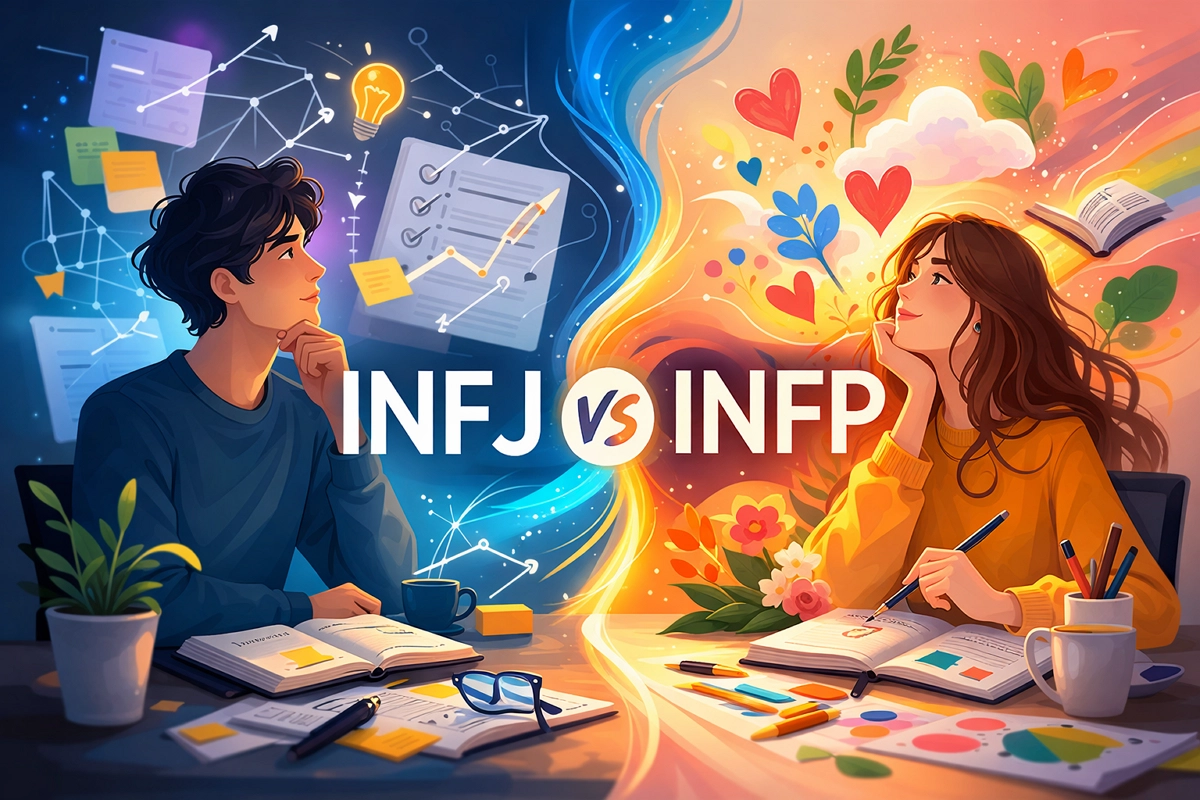
INFJ and INFP differ by just a single letter in their personality codes—but that tiny difference shapes how they think, feel, and interact.
So, what exactly sets them apart? In the following sections, we'll break down the traits, cognitive patterns, and behaviors that make each type unique, helping you understand which personality resonates with you the most.
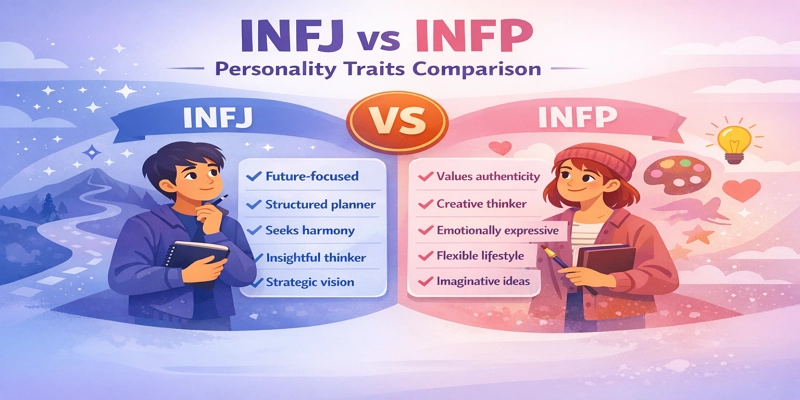
INFJ vs INFP at A Glance
| Personality Type | Core Traits | Typical Strengths | Interaction Style |
|---|---|---|---|
| INFJ (The Advocate) | Insightful, structured, long-term vision | Organized planner, values meaningful connections, empathetic guide | Thoughtful, harmonizing, often anticipates others' needs |
| INFP (The Mediator) | Creative, flexible, authenticity-driven | Seeks personal meaning, imaginative, values-driven | Spontaneous, expressive, follows personal values |
👉 Tip: If you're unsure which type you are, try taking a 16 Personality Test to get a clearer result.
INFJ vs INFP Cognitive Functions
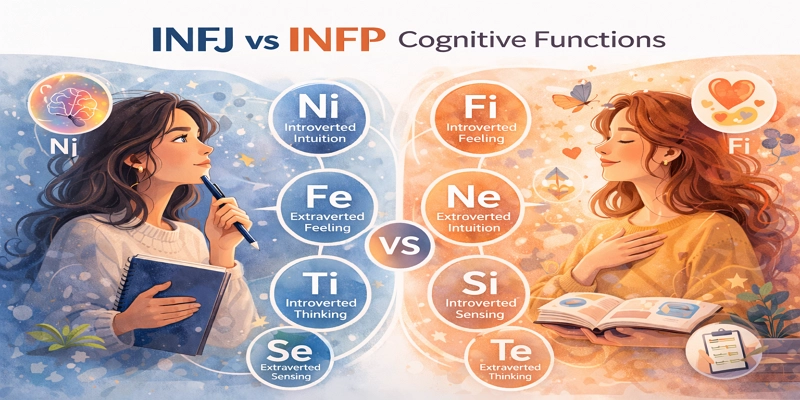
Understanding the cognitive functions helps explain why INFJs and INFPs behave differently:
| Type | Dominant | Auxiliary | Tertiary | Inferior |
|---|---|---|---|---|
| INFJ | Ni (Introverted Intuition) | Fe (Extraverted Feeling) | Ti (Introverted Thinking) | Se (Extraverted Sensing) |
| INFP | Fi (Introverted Feeling) | Ne (Extraverted Intuition) | Si (Introverted Sensing) | Te (Extraverted Thinking) |
INFJ vs INFP: 7 Key Differences Explained
Their cognitive functions shape how they think, communicate, and make decisions. The table below highlights the most important differences between these two personality types.
| Trait | INFJ | INFP |
|---|---|---|
| Decision-Making | Uses Extraverted Feeling (Fe) to consider group harmony and others' needs | Uses Introverted Feeling (Fi) to follow personal values and authenticity |
| Planning vs Flexibility | Prefers structure, plans, and predictable outcomes | Prefers flexibility and adapting as inspiration appears |
| Thinking Pattern | Introverted Intuition (Ni) focuses on patterns and future insights | Extraverted Intuition (Ne) explores possibilities and ideas |
| Emotional Expression | Often manage emotions carefully, showing empathy while maintaining composure | More openly expressive and may immerse themselves deeply in their feelings. |
| Conflict Response | May withdraw or create firm emotional boundaries (sometimes called the INFJ Door Slam) | Retreats inward to reflect and process emotions |
| Communication and Mannerisms | Thoughtful, deliberate, and socially aware | Authentic, expressive, and sometimes unpredictable |
| Focus on Harmony vs Authenticity | Natural focus on maintaining harmony within groups and relationships, sometimes adjusting their behavior to keep peace | Prioritize staying true to their personal beliefs and identity, even if that means standing apart from others |
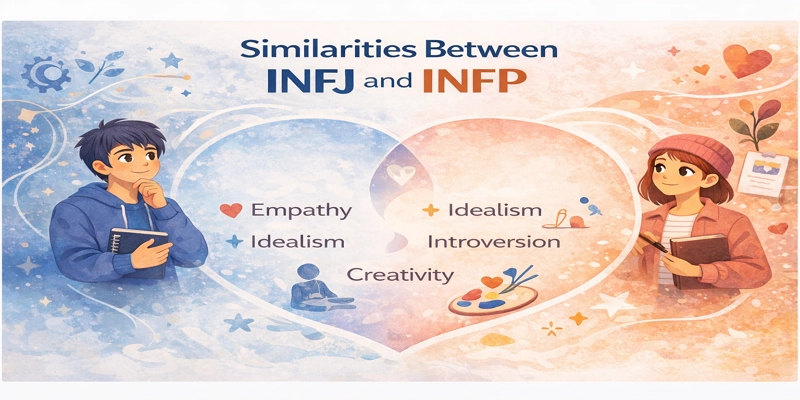
Similarities Between INFJ and INFP
Despite their differences, INFJs and INFPs share many qualities that create natural understanding:
- Empathy: Both types deeply sense others' emotions.
- Idealism: They strive for meaning and value-driven life choices.
- Introversion: Both enjoy introspection and need personal space to recharge.
- Creativity: Strong imagination and appreciation for art, ideas, and philosophy.
INFJ vs INFP: Relationships, Friendship, and Work
Although INFJs and INFPs share empathy and idealism, their interactions can vary depending on the situation. The table below summarizes how these personalities typically interact in romance, friendship, and professional settings.
| Situation | INFJ | INFP | How They Work Together |
|---|---|---|---|
| Romantic Relationships | Seek emotional depth and long-term stability | Value authenticity and emotional expression | INFJs bring structure and guidance, while INFPs add warmth and spontaneity |
| Friendship | Loyal, insightful, and supportive | Imaginative, flexible, and emotionally understanding | Both enjoy meaningful conversations and shared values |
| Workplace | Organized, strategic, leadership-oriented | Creative, flexible, and values-driven | INFJs provide structure while INFPs contribute new ideas |
INFJ vs INFP: Famous People
Knowing famous examples can help visualize type tendencies in real-life behavior and choices.
INFJ Famous People:
- Joe Goldberg (fictional)
- Nelson Mandela
- Nicole Kidman
INFP Famous People:
- J.R.R. Tolkien
- Audrey Hepburn
- Princess Diana
INFJ vs INFP: Tips for Self-Understanding
- Embrace Your Strengths: INFJs should leverage their planning and foresight; INFPs should leverage creativity and authenticity.
- Understand Emotional Triggers: INFJs may retreat; INFPs may overthink feelings. Awareness prevents conflict.
- Balance Alone Time with Connection: Both types need introspection but thrive in meaningful relationships.
Final Thoughts
Hope this article helps you better understand the differences between INFJ and INFP. If you want to learn more about your personality and see how your traits shape your thoughts, feelings, and relationships, you can explore our 16 Personality Test on Myfunquiz for a deeper look at your type.
INFJ vs INFP FAQs
1. How can I tell if I am INFJ or INFP?
INFJs are structured, goal-focused, and may show the "INFJ door slam" when setting boundaries. INFPs follow personal values and express emotions more freely. Taking a 16 Personality Test can help clarify your type.
2. Why did my type change between INFJ and INFP?
It's common for results to shift between INFJ and INFP because they differ by just one letter (Judging vs. Perceiving) and share many traits. Such changes can be influenced by factors like life experiences, current mindset, work environment, or personal priorities.
3. Are INFJs or INFPs more emotional?
Both feel deeply, but INFJs process emotions privately and show measured empathy, while INFPs express feelings more freely and spontaneously.
4. Which is rarer: INFJ or INFP?
INFJs (~1–2%), INFPs (~4–5%). This rarity can sometimes make INFJs feel misunderstood or overlooked in social contexts.
5. How do INFJs and INFPs behave in relationships?
INFJs bring stability, foresight, and empathy, whereas INFPs bring creativity, flexibility, and authenticity. Together, they balance each other, with communication and respect key to harmony.


 Sophie Caldwell
INFJ Door Slam: What It Is and How to Reverse It
Explore the psychology behind the INFJ door slam, why it happens, and how to navigate relationships with INFJs without triggering this response.